Passport for Learning
The Passport for learning shared framework helps us understand each learner individually, enabling us to create opportunities for every child and young person to express themselves and actively engage in meaningful activities throughout their school day.
Passport groups
What are the Passport groups?
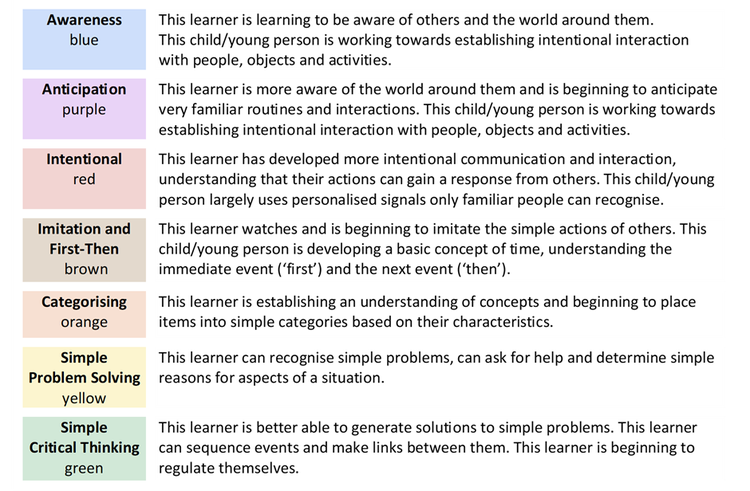
The 7 sequential Passport groups are:
Knowing our learners’ CRES
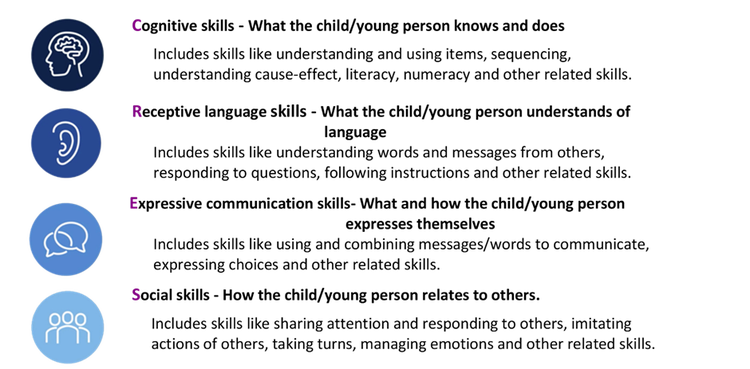
What is CRES?
We get to know each child/young person’s range of skills across 4 domains by answering questions about each learner. CRES means:
We get to know each child/young person’s range of skills across 4 domains AND 7 sequential Passport groups.
Each Passport group is described by a key word(s), which is the main area of focus for the group. This means as many times as possible learners practise this skill.
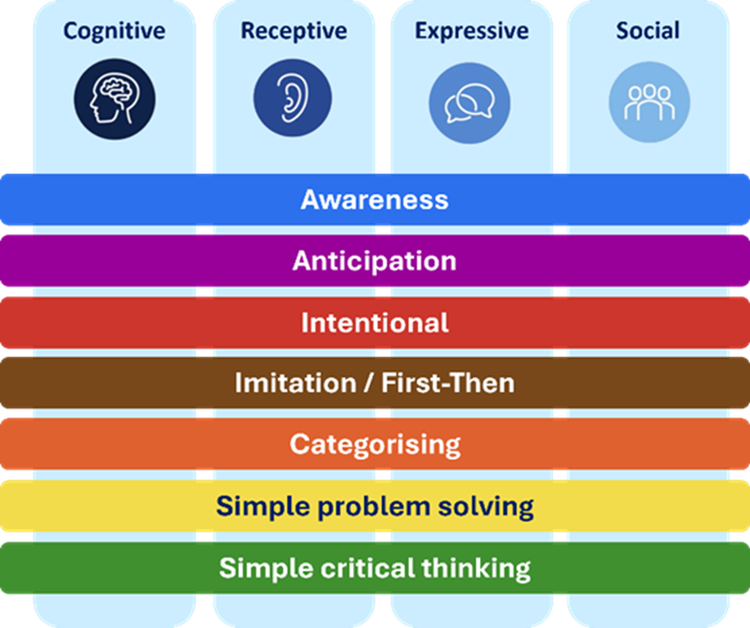
Please note - Learners may be in different Passport groups for each domain. For example, a learner may have the following profile:

Background information
Centre for Education Statistics and Evaluation, Department of Education re-designed the Passport.
It is now called the Passport for learning and is currently available to over 1,000 schools across NSW.
Acknowledgments
We acknowledge and thank Ylana Bloom, long-term mentor/coach to CRS staff for enabling us to better understand our learners. We also thank the Creating a Toolbox Team – CATT (previously called the Creating a Voice team) for showcasing their practices over many years to the CRS community and other schools.